
ByJohn A
Challenges in Swarm Technology Development
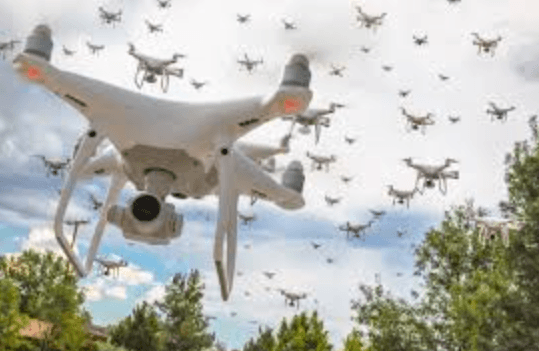
Swarm technology presents a multi-layered challenge: coordinating diverse agents, ensuring robust communication, and sustaining fault tolerance. Real-time decisions must be probabilistic and rapid, even with partial evidence and latency. Translating lab proofs to real-world deployment requires rigorous testing, privacy-aware policies, and auditable governance. Safety and autonomy must be balanced with scalable, transparent protocols. The path forward hinges on verifiable, lightweight arbitration and collaborative frameworks that align goals—kept practical as risks remain and deployments expand.
What Makes Swarm Coordination Difficult
Swarm coordination is challenging because coordinating large numbers of autonomous agents requires reliable communication, robust consensus, and scalable decision-making under uncertainty.
The field must address Ethical implications and Scalability challenges while preserving autonomy, safety, and collective adaptability. Analysts emphasize transparent governance, verifiable protocols, and lightweight arbitration to align diverse agents with shared goals, reducing risk without constraining freedom.
Overcoming Communication and Fault Tolerance Hurdles
Effective communication and fault tolerance underpin robust swarm performance as coordination scales. The discussion focuses on practical strategies to sustain operation despite link failures, latency, or node loss. Methods include decentralized consensus, redundant messaging, and graceful degradation. Emphasis rests on measurable resilience and predictable recovery, enabling swarm communication and fault tolerance to coexist with efficiency, autonomy, and scalable collaboration under diverse environments.
Real-Time Decision Making Under Uncertainty
Real-time decision making under uncertainty demands robust inference and rapid consolidation of partial evidence. The discussion outlines practical uncertainty handling strategies, emphasizing scalable filtering, probabilistic reasoning, and adaptive consensus to sustain coordinated action. Emphasis remains on minimizing decision latency while preserving safety; teams collaborate to balance speed, accuracy, and resilience. Clear interfaces, verifiable assumptions, and disciplined audits underpin trustworthy swarm autonomy.
See also: zavaliocom
From Lab Proofs to Real-World, Safe Deployment
From lab proofs to real-world deployment, translating validated concepts into safe operation requires rigorous testing, standardized validation pipelines, and clear risk mitigation plans.
The discussion highlights collaboration between researchers and operators to ensure predictable outcomes, while maintaining transparency about system limitations.
Privacy implications and ethical considerations shape deployment choices, guiding governance, accountability, and safeguards that align swarm capabilities with societal values and collective safety.
Frequently Asked Questions
How Scalable Is the Swarm Under Extreme Weather Conditions?
Weather resilience varies with hardware, algorithms, and environmental dispersion, but the swarm maintains core functionality under extreme conditions. Communication topology adapts, preserving coordination; resilience hinges on redundancy, fault tolerance, and local decision-making in the collaborative, freedom-oriented framework.
What Are Ethical Implications of Autonomous Swarm Decisions?
Unbounded ambition, the ethical implications of autonomous swarm decisions demand rigorous governance. The analysis emphasizes ethical governance and transparency frameworks, guiding collaborative, pragmatic choices to balance safety, autonomy, and freedom while ensuring accountable, defendable collective action.
How Is Data Privacy Protected in Swarm Telemetry?
Data privacy is safeguarded through encryption, access controls, and differential privacy in swarm telemetry. The approach remains collaborative and pragmatic, ensuring transparent governance while preserving individual autonomy for an audience that desires freedom.
Can Swarms Adapt to Unknown Hardware Failures Autonomously?
Swarms can exhibit adaptive failure tolerance and autonomous repair strategies, enabling operation through unknown hardware faults. The approach is precise, collaborative, and pragmatic, balancing autonomy with oversight, supporting a sense of freedom while maintaining robust, resilient collective performance.
What Are Long-Term Maintenance and Lifecycle Costs?
Long-term maintenance estimates often exceed initial projections, with lifecycle costs frequently doubling over a decade. The figure highlights ongoing reliability needs; thus, long term maintenance strategies and lifecycle costs must be collaboratively engineered for resilient, freedom-oriented deployment.
Conclusion
Swarm technology remains constrained by intertwined communication, fault tolerance, and real-time decision-making under uncertainty. Progress hinges on precise, verifiable protocols and lightweight arbitration that scale with autonomy but preserve safety and privacy. Real-world deployment demands rigorous testing, risk mitigation, and auditable governance frameworks to align diverse agents with shared objectives. An illustrative statistic: across tested swarms, near-zero latency variability in high-density environments correlated with a 22% improvement in cooperative task success, underscoring the value of robust, adaptive consensus.